











“I’m not a failure,” I shouted at the closed door. “I’m a tragedy. This deadpan world is full of chaos and I’m one of the lost.”
“There are years that ask questions and years that answer.”
I am reminded of Zora Neale Hurston’s quote every time I think of Abdulrazak Gurnah. His fiction was not commercially successful; no one knew him, the author of ten novels, when he won the Nobel Prize in Literature in 2021. Then, unsurprisingly, publishers were desperate to have them in their list; his novels were frantically reissued, so great suddenly was their demand. And each time I read Gurnah, I’m convinced it is his best – a judgment that passes on to the next book. So much is remarkable about Gurnah; foremost among them are perseverance and blind devotion to one’s work.
In Greatest Britain
Admiring Silence, Gurnah’s fifth novel, published in 1996, is, in his own words, a novel about the process of displacement, the process of losing a home, and also coming to learn to live in another home. All this, along with material and emotional adjustments, may be achieved through “the temptation to clean up your history” – to tell your story in such a way that you are accepted, and even liked, by your new compatriots. The ugly should not be too ugly, the dark not too dark, and your journey, from the rotting Global South to the enlightened First World, nothing less than a heroic odyssey into light.
Gurnah’s unnamed protagonist makes a treacherous journey from Zanzibar to England at 22, desperate for an education. People who look like him are barely legal and he squats illegally at an acquaintance’s place while he trains to be a teacher. The washing job at the local diner is tiring, but it is here that he meets Emma, who will go on to become his long-term partner and the mother of his child. For Emma, the job is an “experience”, not a “necessity” – she comes from a respectable, middle-class English family. Her parents view the narrator as an objet de curiosité. Not just them, but even his doctor, who diagnoses him with a “buggered” heart, which is apparently a precondition for Afro-Carribeans. There’s a slight problem with this diagnosis – our man has nothing to do with Africa or the Caribbean; he is strictly an “Indian Ocean lad.” However, for the Englishman, all Black people are “bongo bongos” – end of the discussion.
The conversations with Emma’s father are especially excruciating. (And so funny, if I might add.) The old man is desperate for “Empire stories”, and our protagonist concocts the wildest tales of natives who would have stewed in ignorance and diseases till the end of time if not for the angelical benevolence of the White. They only happened to be slave drivers – a matter they had little choice in. After all, a foreigner has to find ways to keep himself productively engaged on a wild island. The protagonist muses on how the Irish and Scots, who today are so enthusiastic about distancing themselves from the English, have happily filled their coffers with colonial exploits. He nods along to Emma’s father’s admonishing of the natives, even agreeing that the island does not deserve independence and its White masters should not have been treated with so much scorn. In fact, the new native rulers are so uncivilised that they had made cannibalism legal, so all told it was better for the Whites to have escaped in time. The protagonist perhaps hopes for a lighthearted repartee but his audience is entirely unsuspecting. This enterprise could be of some benefit to his relationship, but alas, things with Emma are strained and his 17-year-old daughter, Amelia, is mostly dismissive of him.
A short stop in darkness
He’s been away from Zanzibar for 20 years, a gap he can no longer justify to his family. This would be the first time he was going home after coming to England, and before his feet even touch the holy motherland, he knows everyone and everything is worse for wear. And so they are. Routine squalor greets him. The toilets are blocked, the politicians are as corrupt as ever, and the poverty is shocking. The temperamental, young nation seems to have no centre and things have remained predictably the same. He’s 42 now. He knows sooner or later a match will be forced on him and he’ll have to answer for his long absence. The house revolts him and he is astounded by the vast spread of acquaintances and family, all of whose approval is of immense importance. Being home also reminds him of the wasteful luxuries that nations like England have acquired at the cost of the absolute destruction of their colonies. He rightly recognises how, more than the plunder of material wealth, the long centuries of brutal colonisation have hollowed out a people’s moral conscience. Virtue and goodness are impossible when one has nothing.
A marriage proposal opens the most dreaded can of worms. He has kept Emma a secret, and by extension, Amelia too. His family believes it is time for him to take a wife, while Emma is under the impression that the folks in Zanzibar know about her but are too crude to include her in their correspondence. The lies pile up on both sides, forcing the narrator into a terrain so slippery that he dares not speak without considering the reverberations his words might cause. He is what many of us would call a habitual liar but for a man caught between two realities for 20 years, the lies, perpetuated through silence, point to a permanent feeling of loss, of traipsing two worlds, one which is forever lost and the other, of constant suspicion.
His three weeks in Zanzibar remind him once again of the plural society they have lost – the confluence of languages, cultures, and races that was once taken for granted. The Indians, especially Gujarati Baniyas, are an intrinsic part of this makeup and Gurnah draws on the shared humanity of the Global South and the brotherhood of the colonised peoples that Gandhi had envisioned. Gandhi’s visit to Zanzibar had a deep impact on the nation’s quest for freedom and he single-handedly won a terrific goodwill for India. In Zanzibar, the protagonist exists in both post- and pre-independence eras, seeing with greater clarity the colonial wound that is still festering and the pretence of English enlightenment that he must return to soon.
This novel could have descended into the pits of despair but Gurnah’s humour, full of teeth and acid, takes a more realistic view of post-colonial depression – cannibalism might not be legal in the literal sense, but the former subjects metaphorically tear into each other’s flesh trying to make ends meet, meanwhile, the ex ringmasters, now preferring to work from their temperate remote locations, continue to pull the strings through ridiculous visa laws, insidious racism, and continued segreation of the Whites and the Rest. Alongside this are Gurnah’s side-splitting descriptions of his aeroplane neighbour endlessly passing gas – the texture and smell of each release escaping the pages, assaulting the reader’s every sense. And that is exactly what makes a Nobel laureate: a writer you wouldn’t mind even if he exclusively wrote a book on flatulence.
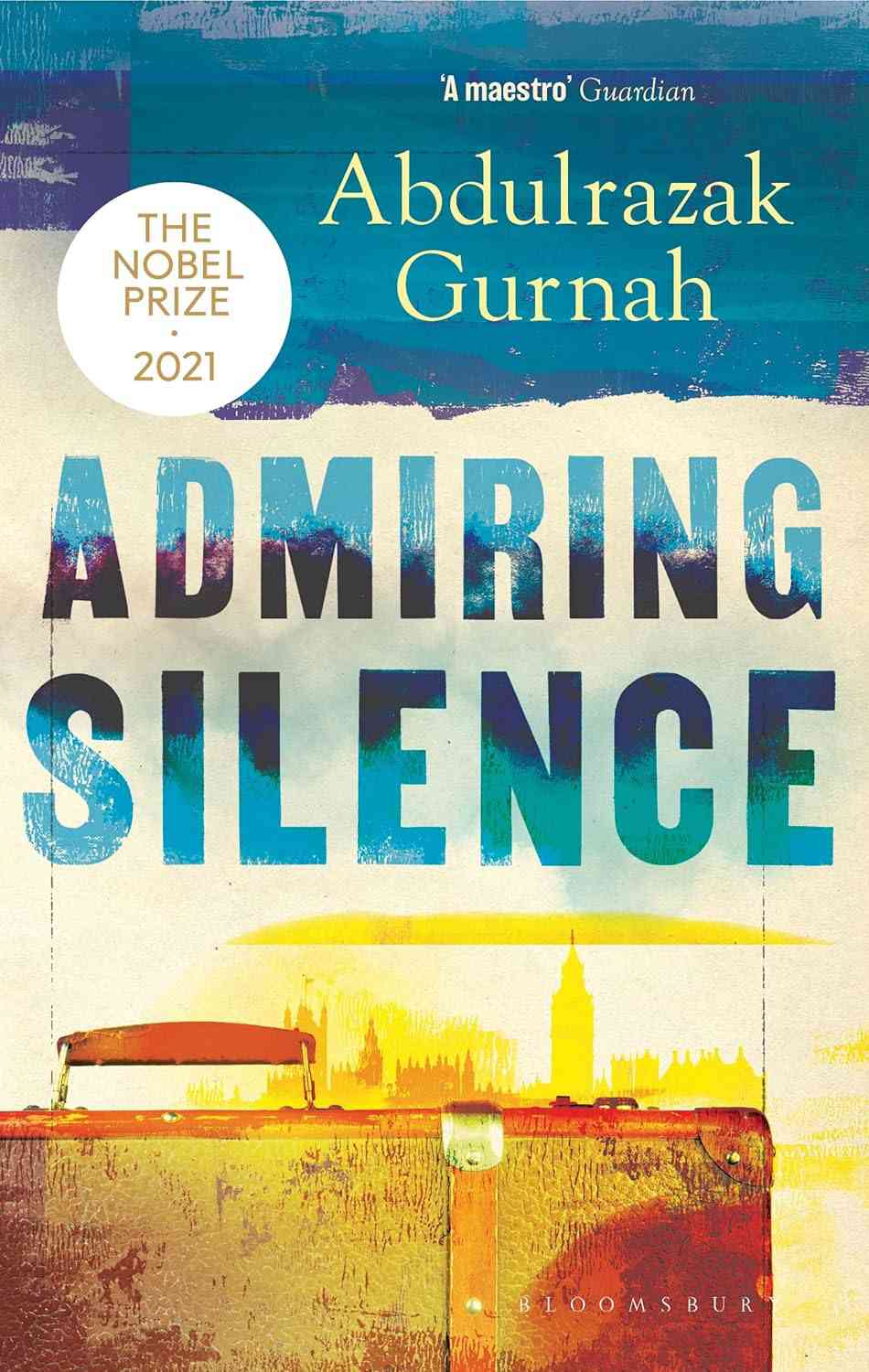
Admiring Silence, Abdulrazak Gurnah, Bloomsbury.
