





On February 25, 2024, Aaron Bushnell, a 25-year-old US Air Force serviceman, walked to the Israeli Embassy in Washington, DC, dressed in military uniform, placed his phone on the ground to record himself, doused his body with flammable liquid, and set himself on fire. In a live broadcast before he immolated himself, Bushnell declared, “I will no longer be complicit in genocide. I’m about to engage in an extreme act of protest, but compared to what people have been experiencing in Palestine at the hands of their colonisers, it’s not extreme at all. This is what our ruling class has decided will be normal. Free Palestine.” He died hours later.
Bushnell’s act forced a moral and emotional confrontation that news cycles and diplomatic statements could not. It resonated globally because of the shocking nature of on-camera self-immolation but also because of its political clarity. His body in flames brought an immediacy to the spectacle of witnessing. It indicted Israel’s targeted bombings of civilians in the Gaza genocide and US complicity at a time when news rooms were making abstract arguments about a “complicated dispute”.
Bushnell joins a long and difficult lineage of those who have used self-sacrifice, especially self-inflicted death, as a form of political dissent. From Bhagat Singh’s embrace of martyrdom under British colonial rule to self-immolating monks in Vietnam, from Rohith Vemula and numerous other Dalit activists, and farmers in India to Arab Spring suicides, the act of publicly choosing death has functioned as a radical political intervention.
Yet such acts disturb us because they inhabit a paradox. Why do some in society grant these acts extraordinary moral weight, while others dismiss them as pathological or futile? What can we gain in understanding self-sacrifice, including self-immolation and other suicidal acts, as a form of political dissent? Can the deliberate destruction of one’s own being become a claim to political agency?
Self-sacrificial protest has a vocabulary rooted in many cultures. In Ireland, hunger strikes were used as an assertion of dignity against colonial repression but drew from the tradition of striking outside a debtor’s house which was seen to bring dishonour to a debtor. In India, the Gandhian tradition of fast until death or hunger strikes, although not suicidal, drew from a similar lineage of ascetic tradition but also invoked traditions of sit-in protests in Jainism and Buddhism. The idea seems to be that the suffering body demands a moral reckoning which cannot be ignored.
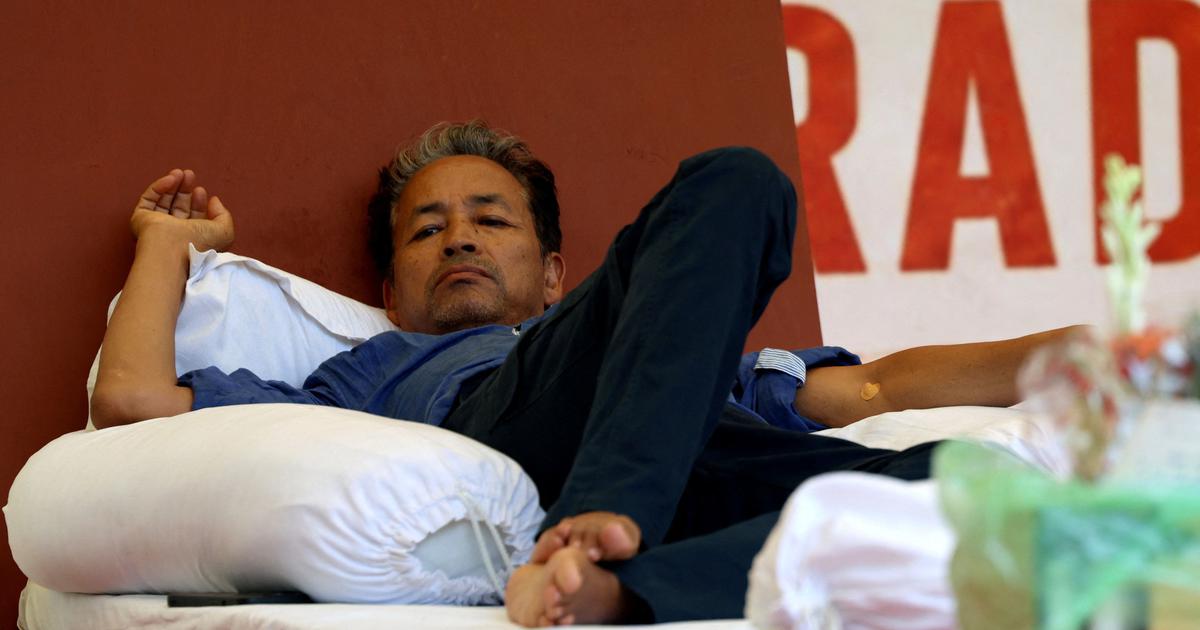
Of all forms of self-endangerment in dissent, the hunger strike became one of the most widespread and culturally resonant political protests in the 20th century. It involves voluntary refusal of food (and sometimes water) to the point of severe debility or even death. Hunger strikers inflict suffering only on themselves; therefore, it has often been framed as an ethical appeal from a position of powerlessness. By choosing to undergo pain rather than inflict it, hunger strikers claim a moral high ground. Their deliberate suffering highlights the injustice of what they are protesting against and can evoke public sympathy, shame authorities, and rally support, as many observers have noted.
In modern democracies especially, a person starving in protest presents a profound dilemma. Authorities must either accede to the demand, force-feed the protester (raising human rights concerns), or risk letting them die and facing public outrage.
One early precedent came from the struggle for women’s suffrage in Britain. Suffragettes, jailed for protests, began to use hunger strikes as a means to protest their incarceration and mistreatment. British authorities responded with forcible feeding, a brutal procedure that only heightened public sympathy for the striking women. One of them, Emily Wilding Davison – who died in another risky protest in 1913 – had said that “a life would have to be given before the vote was won”, effectively predicting that a martyrdom would galvanise the movement. After her death, the movement did revere her as a martyr.
MK Gandhi was the most famous exponent of the political hunger strike. He undertook at least 20 fasts for various purposes. He saw fasting as part of his philosophy of Satyagraha (insisting upon truth) and a means to purify oneself and appeal to the conscience of opponents and the public. Gandhi explicitly called the fast “a great weapon in the armoury of Satyagraha” – a powerful tool which, if used with genuine self-sacrificial spirit, could move hearts more effectively than any sword. This usage underscored that the hunger striker’s suffering was meant to embody the suffering of others and thus spur ethical action. Gandhi was accused of coercion even during his lifetime but he insisted that his fasts were acts of self-purification meant to merit a response. Nonetheless, the political impact of his fasts until death was real both for the British government as well as the Indian publics.
Another notable case was that of Jatin Das, who fasted to protest the abusive treatment of political prisoners in 1929. His hunger strike lasted 63 days and ended in his death which sent shockwaves through India. The 24-year-old’s funeral procession in Calcutta drew massive crowds and galvanised anti-colonial sentiment. Much like Terence MacSwiney’s hunger strike in Ireland in 1920–21, Jatin Das’s death in custody highlighted colonial injustices to the world. Bhagat Singh, the famous revolutionary, and his comrade Batukeshwar Dutt also undertook a long hunger strike in jail that same year to demand equal rights for Indian prisoners. Though Bhagat Singh was eventually executed by hanging, the very image of these young men willingly courting death for dignity turned them into heroes in the public eye. It established a template in the Indian imagination that dying for a just cause confers martyrdom and moral victory, even in defeat.
After independence, Indian activists continued to see fasting as a legitimate protest method. Perhaps the most consequential hunger strike after independence was that of Potti Sriramulu in 1952. Sriramulu was a Gandhian who undertook a “fast unto death” demanding the creation of a separate Telugu-speaking state (Andhra) out of the Madras State. Despite appeals from leaders, Sriramulu’s fast stretched week after week. After 56 days without food, Sriramulu died on December 15, 1952. Riots and mass protests erupted across Andhra regions upon news of his death. Faced with this uproar, Nehru’s government had to give in and announce the formation of the Andhra State. Sriramulu was immediately hailed as Amarajeevi (“immortal being”) by Telugu speakers, and his body was venerated in a ceremonial funeral.
Elsewhere in the world too, hunger strikes continued to punctuate many political conflicts. During the Troubles in Northern Ireland, imprisoned Irish republican militants turned to hunger strikes to protest their prison conditions and to demand recognition as political prisoners. In 1981, Bobby Sands and nine other members of the Provisional Irish Republican Army went on a hunger strike. Their protest was reported the world over. The Pope and several world leaders appealed to Britain’s Prime Minister Margaret Thatcher to relent or negotiate. Sands survived 66 days without food. He was elected to the British Parliament during his strike but all ten strikers died in their protest. The strikers’ deaths spurred Irish republican sentiment, drew sympathy to their cause, and is often credited with boosting the Sinn Féin party’s political prominence. The Irish hunger strikers explicitly framed themselves as martyrs in a long tradition of Irish resistance, echoing Terence MacSwiney’s ethos that unyielding suffering could be a weapon.
As a matter of fact, a hunger strike has consistently been the choice of protest method among political prisoners in authoritarian regimes, where any other form of protest is impossible. In 2000, hundreds of prisoners across Turkey began what they called a “death fast” against the introduction of harsh high-security prison cells. This campaign lasted for years, with participants fasting in relays or to death; by some counts, over 100 people eventually died in this protracted protest.
Political theorist Banu Bargu, in her book Starve and Immolate: The Politics of Human Weapons, chronicled how these Turkish hunger strikers viewed their bodies as their final weapon against State power. Bargu notes a “politics of human weapons” at play: when denied any tools of resistance, the protesters weaponised their very lives, using the slow violence of self-starvation to indict the regime. Often, States assert control over bodies and life through tactics like detentions and force-feeding, such as in the case of Irom Sharmila, who conducted a remarkable 16-year hunger strike against military abuses in northeast India. The Turkish case, like others, raised difficult ethical questions about force-feeding and state responsibility, but it also demonstrated how even the most marginalised dissenters can gain agency and international attention through strategic self-suffering.
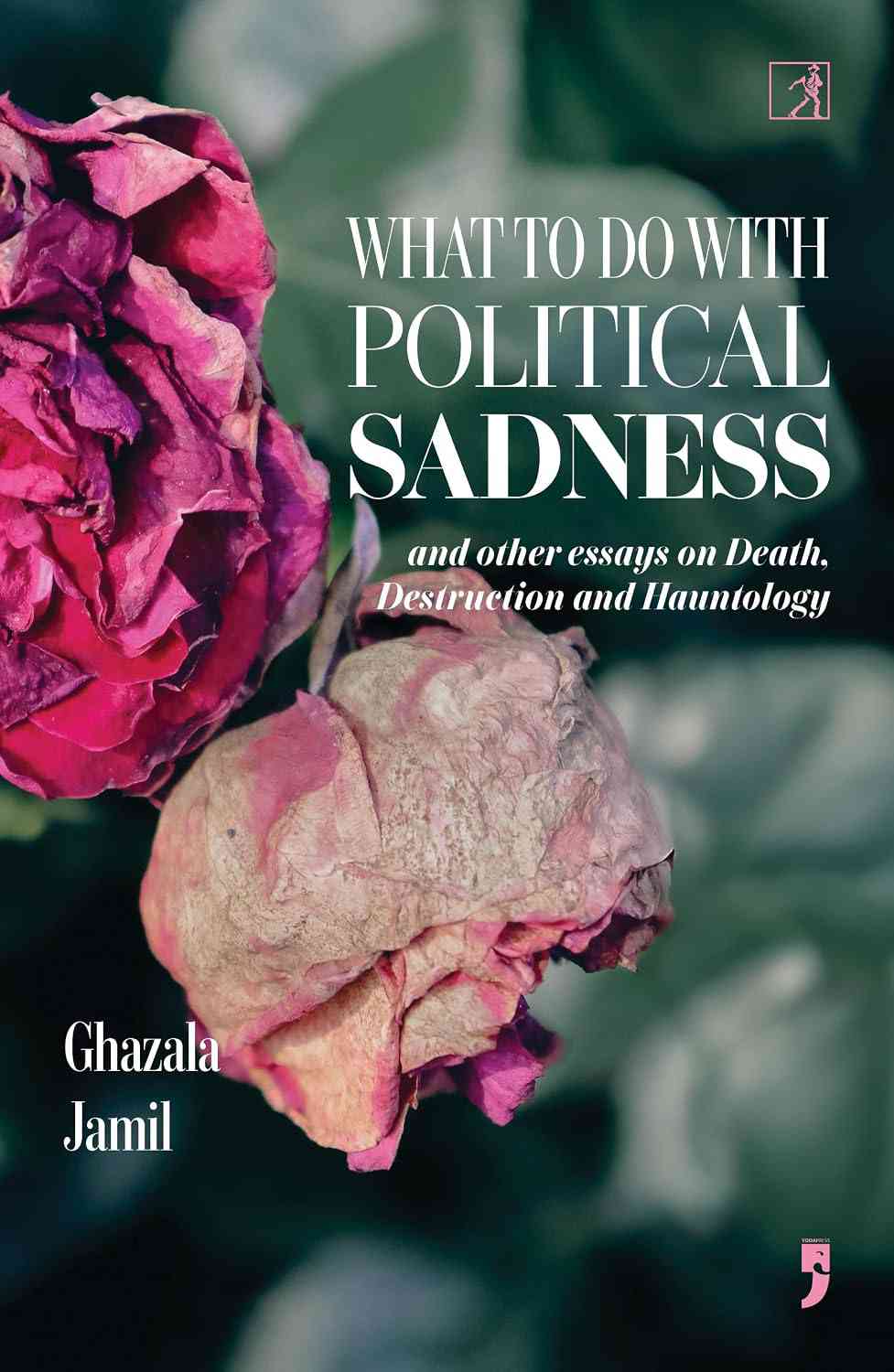
Excerpted with permission from What to Do with Political Sadness: And other Essays on Death, Destruction and Hauntology, Ghazala Jamil, Simon and Schuster India.
