








SC delivers split verdict on validity of provision requiring government nod to probe public servants
While Justice BV Nagarathna held that the mandate was unconstitutional, Justice KV Viswanathan said the Lokpal or Lokayukta should decide on granting sanction.
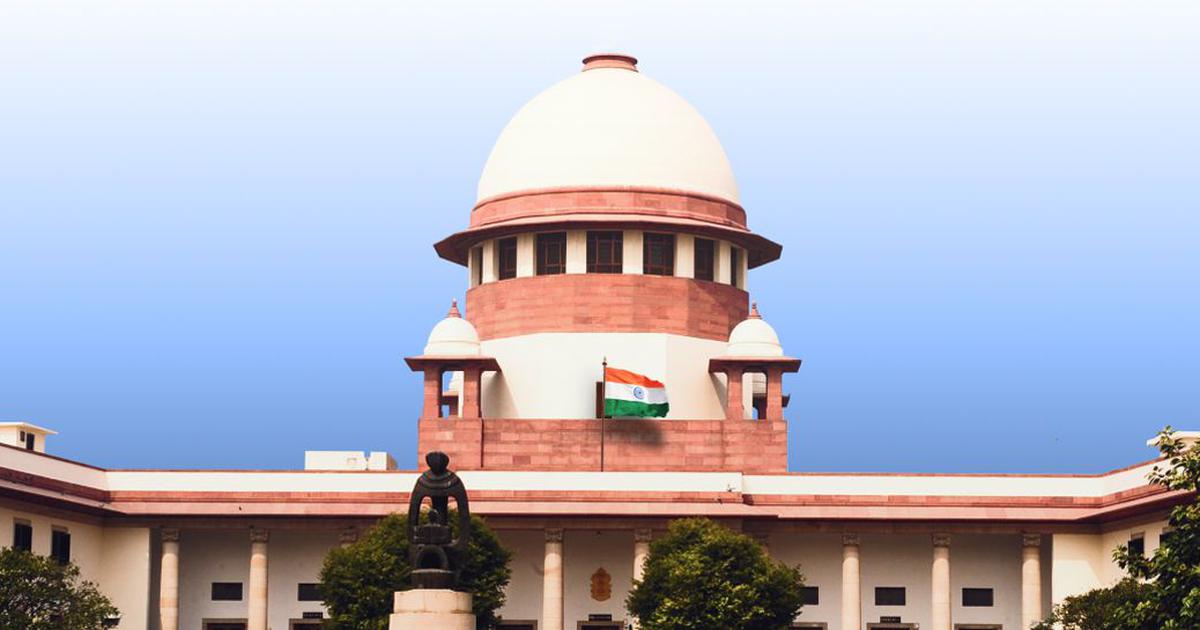
A two-judge bench of the Supreme Court on Tuesday delivered a split verdict on the constitutionality of an amendment to the Prevention of Corruption Act mandating prior permission from the government to begin an investigation against a public servant under the law, Bar and Bench reported.
Justice BV Nagarathna held that the provision, Section 17A of the Act, contravenes the Constitution. On the other hand, KV Viswanathan upheld the provision, but read it down to state that sanction should depend on the recommendation of the Lokpal or Lokayukta, Live Law reported.
The Lokpal at the Centre and the Lokayukta at the state level are anti-corruption ombudsmen.
On account of the divergent views, the court directed that the case be placed before the chief justice, who could direct another bench to decide on the questions at hand.
The amendment to the Act requiring prior sanction was introduced in 2018. Earlier, such an approval was necessary only for inquiries against officials above the rank of a joint secretary.
Nagarathna said that the requirement of prior sanction contradicted the objective of the Act, Bar and Bench reported. “This section is nothing but an attempt to resurrect the section, which was struck down and is thus an attempt to protect the corrupt,” she said.
However, Viswanathan said that an independent entity that is free from the executive must decide on granting sanction. “Section 17A is constitutionally valid subject to the condition that the sanction must be decided by the Lok Pal or the Lok Ayukta of the state,” Live Law quoted him as saying.
Striking down the provision altogether would amount to “throwing the baby out with the bathwater”, Viswanathan said, adding that unless honest public servants were protected from frivolous investigation, “policy paralysis” would set in.
The Supreme Court passed the split verdict in response to a petition by non-governmental organisation Centre for Public Interest Litigation.
Lawyer Prashant Bhushan, representing the organisation, had contended that the requirement for prior sanction reintroduced a protection that had already been struck down by the Supreme Court in the cases of Vineet Narain vs Union of India and Subramaniam Swamy vs Director, CBI, according to Live Law.
Bhushan argued that Section 17A had the same flaw, as it allowed members of the executive to decide if an inquiry could be launched, leading to a conflict of interest.
However, Solicitor General Tushar Mehta, representing the Union government, argued that the previous judgements did not bar all forms of prior sanction. He argued that the Vineet Narain and Subramaniam Swamy cases were about reasonable classification under Article 14, which pertains to the right to equality, Live Law reported.
Mehta argued that Section 17A protects official decision-making and is intended to prevent frivolous cases that could lead to policy paralysis.
