







Top updates: Israel strikes Iranian oil depots near Tehran
Iran accused the US of striking desalination plant on Qeshm Island, disrupting water supply to 30 villages.
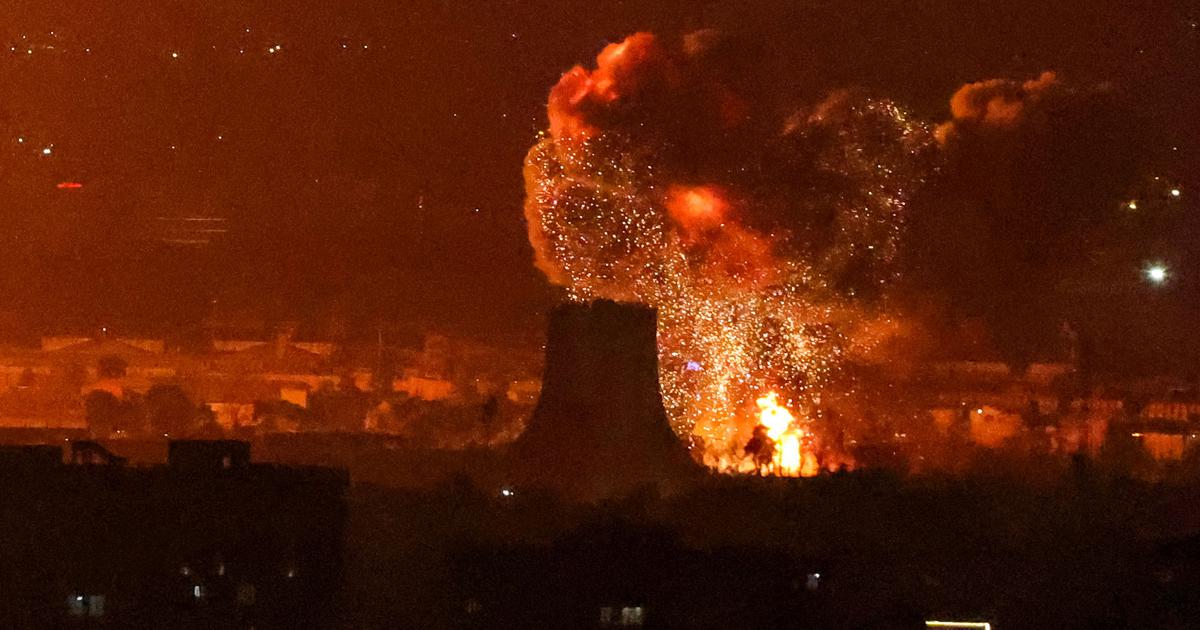
The Israeli military struck several Iranian fuel storage sites late on Saturday, triggering large explosions and fires in Tehran and the neighbouring city of Karaj, Al Jazeera reported.
Iran’s Ministry of Oil said that multiple oil depots in Tehran and Alborz provinces had been targeted, New York Times reported. The Israeli military confirmed the strikes, saying it had attacked several fuel storage and energy facilities in Tehran that were allegedly being used by Iran’s armed forces, the newspaper reported.
On Saturday, Iran’s Foreign Minister Abbas Araghchi also accused the United States of attacking adesalination plant on Qeshm Island, a water treatment facility that removes salt from seawater to produce fresh drinking water.
In a post on X, Araghchi said the strike had impacted water supply in 30 villages.
“Attacking Iran’s infrastructure is a dangerous move with grave consequences,” Araghchi said. “The US set this precedent, not Iran.”
Footage shows a massive fire raging at the Shahran oil depot on the outskirts of northern Tehran after an Israeli attack late Saturday. The Israeli military says it struck fuel storage and related sites it alleges are linked to the Iranian armed forces. pic.twitter.com/VvlWiUjGTT
— Al Jazeera Breaking News (@AJENews) March 7, 2026
Here are more top updates from the conflict in West Asia:
- Iran’s Islamic Revolutionary Guard Corps later said it had struck the US’ Naval Support Activity in Bahrain in response, alleging that the base had been used earlier in the day to attack the desalination plant, AFP reported. Desalination plants are a key source of drinking water across the Gulf region, where many countries rely on such facilities.
- Iran’s Islamic Revolutionary Guard Corps Spokesperson Ali Mohammad Naini said on Sunday that the country could continue an intense conflict with the United States and Israel for at least six months, news agency Fars reported. The force also claimed that it had targeted more than 200 locations linked to American and Israeli bases and facilities in the region.
- Israel carried out new strikes in southern Lebanon on Sunday targeting commanders linked to the Lebanese branch of Iran’s Revolutionary Guards’ Quds Force, AFP reported. At least four persons were killed in the Israeli airstrike on a hotel in central Beirut, The Guardian quoted the Lebanese Health Ministry as saying. The strikes came after Israeli Prime Minister Benjamin Netanyahu warned of “many surprises” in the next phase of the war.
- The Israeli military said that it would “not allow Iranian terrorist elements to establish themselves in Lebanese territory”, AFP reported. On Monday, the Lebanese militant group Hezbollah said that it fired rockets and drones across the border in response to the killing of Iranian Supreme Leader Ayatollah Ali Khamenei.
- Several Gulf countries also reported missile and drone attacks on Sunday as the conflict entered its second week. Saudi Arabia, Qatar and Kuwait said they had faced new attacks, while explosions were reported earlier in Dubai and Manama, AFP reported. On Saturday, Iranian President Masoud Pezeshkian apologised for attacking neighbouring countries, saying that Tehran will no longer target them “unless attacked from there” amid the conflict in West Asia.
- After his statement sparked domestic criticism he later claimed that he was “misinterpreted by the enemy that seeks to sow division with neighbours”, The Guardian reported. On Sunday, Pezeshkian warned that Iran would be “forced to respond” if any neighbouring country is used to launch attacks against it. “Responding does not mean we have disputes with that country or wish to harm its people…we would be responding out of necessity,” he said.
- Kuwait said that it reported missile and drone attacks on Sunday. The country’s national oil company said it had made a precautionary cut in crude production. The country’s military said it had responded to drones that entered its airspace, AFP reported. Fuel tanks at Kuwait International Airport were targeted in a drone attack, and a fire broke out at the headquarters of the Public Institution for Social Security, according to Al Jazeera.
- Kuwaiti authorities later said firefighters had brought the blaze at the airport fuel tanks under control, but efforts were still underway to contain the fire at the social security building. Kuwait’s government also said its air defences intercepted and destroyed three ballistic missiles. The interior ministry said two border security personnel, Warrant Officer Abdullah Imad Al-Sharrah and Major Fahd Abdulaziz Al-Majmaid, were killed while on duty, Al Jazeera reported.
Flames engulfed Kuwait’s Public Institution for Social Security high-rise headquarters after it was hit by a suspected drone amid a wave of Iranian aerial strikes on the country. pic.twitter.com/7zslUZVOQA
— Al Jazeera Breaking News (@AJENews) March 8, 2026
- A loud blast was reported near the United States embassy in Norway’s capital Oslo early on Sunday, prompting a large police response, Reuters reported. The authorities said that it was not immediately clear what caused the explosion or whether it was linked to the wider West Asia conflict. The Oslo Police District said officers were in contact with the embassy and that no injuries had been reported. Smoke was seen rising near the embassy compound, Reuters quoted the Norwegian newspaper Verdens Gang as reporting.
- More than 52,000 Indian citizens have returned to the country from the Gulf region after the partial reopening of regional airspace amid the escalating West Asia crisis, the Ministry of External Affairs said on Saturday. “More flights are planned in the coming days,” the statement added. The ministry said that it is closely monitoring the situation and working with regional governments to assist stranded nationals.
- Security curbs and mobile internet speed restrictions were lifted in the Kashmir Valley on Saturday after six days of unrest following the killing of Iranian Supreme Leader Ayatollah Ali Khamenei, The Hindu reported. Jammu and Kashmir Director General of Police Nalin Prabhat said that the police would maintain sustained pressure on alleged anti-national elements and intensify counter-terror operations in south Kashmir.
The conflict broke out on February 28 after Israel and the US had launched a joint operation to “degrade the capabilities” of the Iranian government. Tehran retaliated by striking Israel and US military bases in the region, and targeting major cities in other Gulf countries and some ships.
The joint attacks by Israel and the US on Iran came amid tensions between the three countries over Tehran’s nuclear programme. Washington acts as a guarantor of Israel’s security. Israel has been claiming that Iran is close to obtaining a nuclear weapon, which could alter the regional security balance.
Tehran has long maintained that its nuclear programme is for civilian purposes.
The tensions
The US has repeatedly demanded that Iran give up its nuclear programme, threatening that Tehran must meet its terms or face consequences.
Khamenei had warned on February 1 that an attack by the US would spark a “regional war”.
Israel had been preparing for a possible conflict with Iran for several weeks.
In June, Tehran and Tel Aviv agreed to a ceasefire after 12 days of hostilities.
At the time, the Israeli military had struck what it claimed were nuclear targets, and other sites, in Iran with the aim of stalling Tehran’s nuclear programme. Iran retaliated with missile attacks on Israel.
Both countries had later accused each other of violating the ceasefire.
The two countries had been nudged by the US to accept the ceasefire after Washington on June 22 joined Israel’s war against Iran. The US military had carried out what Trump had described as a “very successful attack” on Iranian nuclear sites in Fordo, Natanz and Esfahan.
While Trump had claimed at the time that Iran’s nuclear facilities had been “completely obliterated” in the attacks, Washington’s preliminary intelligence assessment had said that the strikes only set it back by a few months, and did not destroy its nuclear programme.
Trump’s fresh focus on Iran came after the US’ military operation in Venezuela. On January 3, the US military abducted Venezuelan President Nicolás Maduro and his wife, Cilia Flores, for alleged drug trafficking.
Almost simultaneously, on December 28, protests erupted in Iran initially focused on discontent about rising inflation. However, they later expanded as demonstrations in more than 100 towns demanded an end to clerical rule.
Following this, Trump had announced that the US military was moving warships towards Iran “just in case” he wants to take action, saying that he was “watching them very closely”.
