









One Indian sailor killed, six injured in Iranian missile strike on UAE tankers
The attacks occurred while the vessels were transiting the southern shipping lane of the Strait of Hormuz, the United Arab Emirates stated.
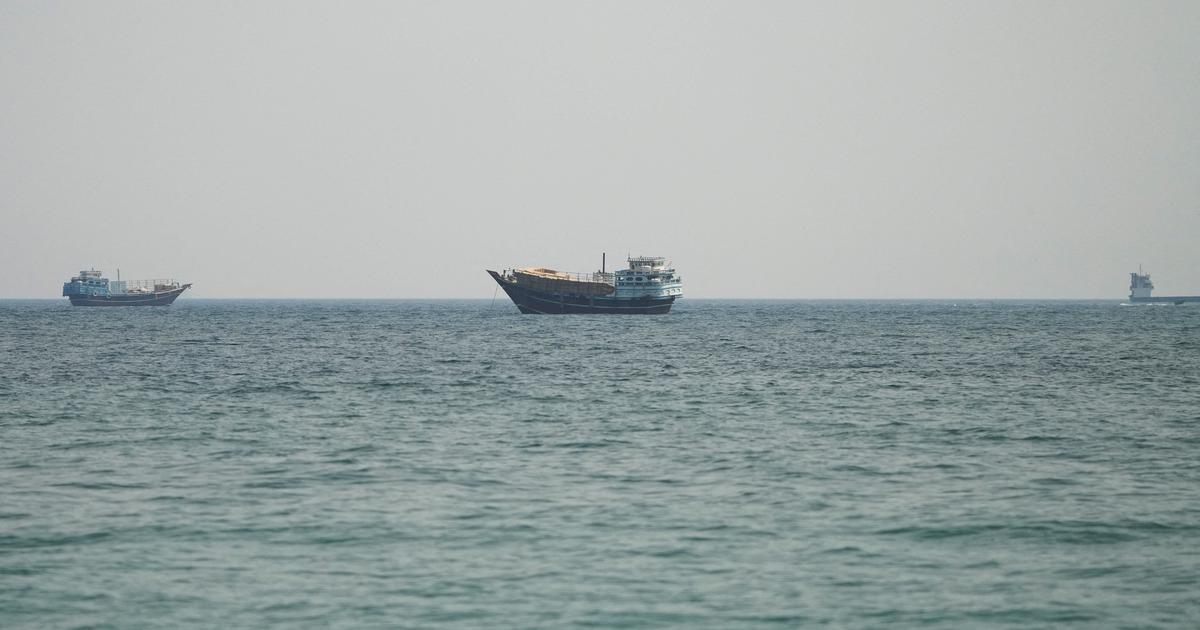
One Indian sailor was killed and six were injured after after Iran attacked two ships in the Strait of Hormuz, stated the United Arab Emirates on Tuesday.
The UAE’s Ministry of Defence did not specify when the attacks took place. It said the eight hurt included six Indians and two Ukrainian nationals. Four were in serious condition.
The attacks took place when the tankers – Mombasa and Al Bahiyah – were transiting the southern shipping lane of the Strait of Hormuz, within Omani territorial waters, said the ministry.
“The attack also caused material damage to both tankers as a result of the fires that broke out on board, which have since been brought under control,” it added.
The Ministry of Defence announces that the national tankers Mombasa and Al Bahiyah were targeted by two Iranian cruise missiles while transiting the southern shipping lane of the Strait of Hormuz, within Omani territorial waters.
— وزارة الدفاع |MOD UAE (@modgovae) July 13, 2026
The attack resulted in the death of one Indian… pic.twitter.com/i1HrXY0fKP
Taking responsibility for the attacks, Iran stated on Tuesday that its forces had hit two “offending” super oil tankers, reported Al Jazeera.
Iran’s Islamic Revolutionary Guard Corps was quoted as saying that the ships had been “deceived by the US” into taking the southern route in Omani waters “by turning off their navigation systems”.
The tankers ignored repeated warnings and “were hit and disabled”, it added.
The attacks came amid renewed tensions between the United States and Iran. On July 8, Washington initiated strikes in response to Tehran’s alleged attacks a day earlier on three liquefied natural gas and crude oil tankers transiting the Strait of Hormuz.
The UAE is a key US ally in the region.
On Sunday, Tehran said that “the Strait of Hormuz will be closed until further notice and until the end of American interventions in this region”.
A day later, US President Donald Trump said that his country’s military was reinstating the naval blockade of Iran and would be “reimbursed” 20% on all cargo shipped through the Strait of Hormuz for keeping the crucial waterway open.
On Tuesday, the UAE condemned the attack on the two ships, calling it a “serious violation and breach of international law” that threatened the security of the region.
“The UAE reserves its full right to respond to this escalation and to take all necessary measures to protect its territory, its citizens and residents, in a manner that safeguards its sovereignty, security, and stability, and protects its national interests,” it added.
The ministry stated that it was “taking all necessary measures to respond decisively to any attempt to undermine the security and stability of the country”.
On Sunday, India’s Ministry of External Affairs said that one Indian was missing and ten were rescued after a commercial vessel, GFS Galaxy, was attacked off the coast of Oman.
Oil prices jump
Amid the renewed escalation in tensions, the global benchmark Brent crude was up nearly 1.8% at 8.50 am on Tuesday, trading at $84.7 a barrel. The price of Brent crude was $78 per barrel on February 27, a day before the conflict started.
Since the war in West Asia began, the Strait of Hormuz, the narrow waterway connecting the Gulf to the Arabian Sea, had effectively been blocked for most international commercial vessels, triggering a global energy crisis. About 20% of global petroleum supply passes through the maritime chokepoint.
On June 15, the US and Iran arrived at an interim agreement to stop the fighting and reopen the strait for commercial vessels. They also held talks in Switzerland aimed at reaching a final peace deal within two months.
The US had ended its blockade of Iran as part of the interim agreement.
However, on Thursday, the US military launched fresh attacks on Iran hours after Trump said that the ceasefire was “over”. Iran retaliated by striking sites in Bahrain, Kuwait and Qatar.
Deal still ‘possible’: Trump
Despite the US launching fresh strikes on Iran on Monday, Trump said later in the day that a deal with Tehran to end the crisis in West Asia was still possible, reported AFP.
“Yeah, I think a deal is possible,” Trump was quoted as telling reporters. “We had a deal with them two days ago and then they said ‘Oh we can’t make that deal. We have to negotiate it further.’”
Iran’s Foreign Ministry spokesman Esmaeil Baqaei reportedly said earlier in the day that Tehran was continuing talks with mediators from Qatar, Pakistan and Oman to prevent further escalation of the crisis.
Meanwhile, the US Central Command stated on Tuesday morning that the country’s military had completed the latest wave of strikes against Iran.
“During the five-hour mission, US forces successfully struck military targets across Iran, including Bushehr, Chah Bahar, Jask, Konarak, Abu Musa, and Bandar Abbas to further degrade Iran’s ability to attack commercial shipping,” it added.
Written by Sneha. Edited by Sara Varghese.
