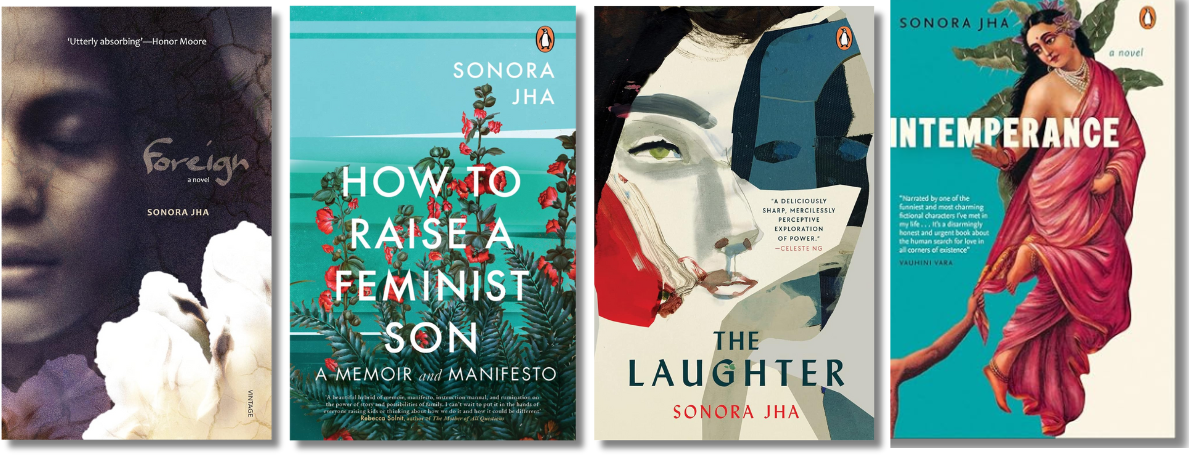

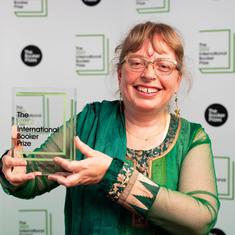

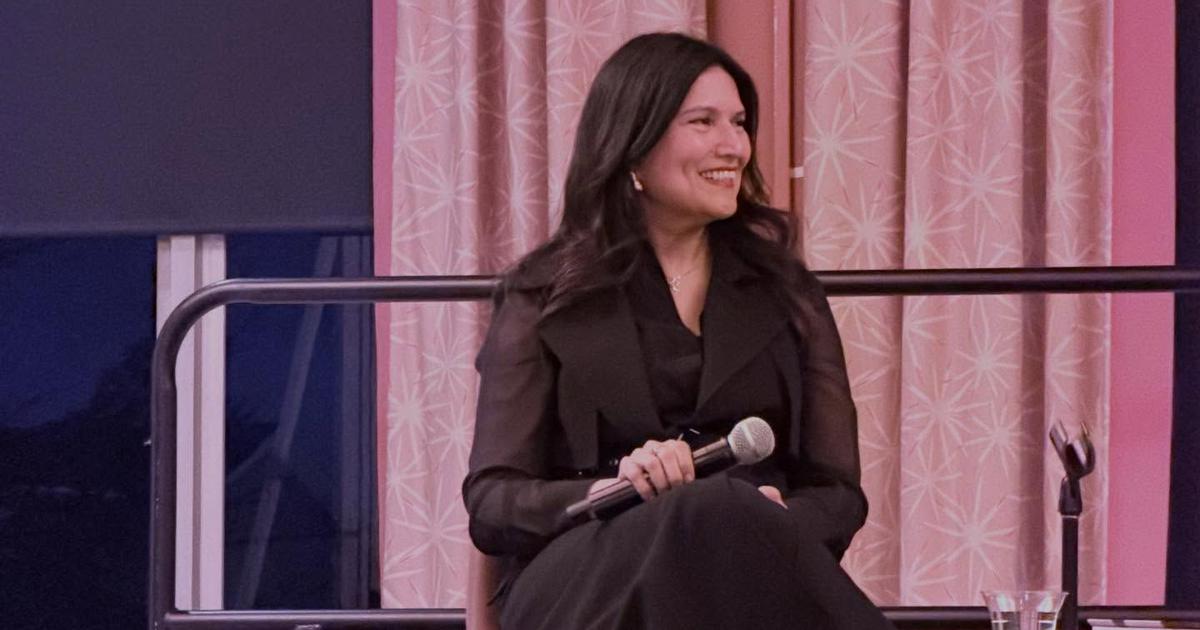
Sonora Jha’s new novel, Intemperance, has been described as “a disarmingly honest and urgent book about the human search for love in all corners of existence.” It’s already been hailed as one of the Best Books of 2025 by the Chicago Review of Books, the Los Angeles Public Library and BookPage and is longlisted for the 2025 Aspen Words Literary Prize. Her third book, The Laughter, which won the 2024 Washington Book Award and the AutHer Prize, was longlisted for the Aspen Words Literary Prize and was named one of the Best Books of 2023 by the New Yorker, NPR, and others. Her previous books are the memoir, How to Raise a Feminist Son, and the novel Foreign. Formerly a journalist in India and Singapore, she is now a Loyola Professor at Seattle University.
Her journalism, she says, “instilled a deep practice of curiosity and academics trained me to plumb deeper in my inquiry.” Her favourite themes: “I like a novel of ideas. I like to follow characters as they grapple with philosophical or social questions and blunder along or take leaps of faith. Political themes of power, marginalisation, gender, race, caste, and sexuality appeal to me the most.”
Your books present a fascinating trajectory, going from the poignant realism of farmers’ suicides in Foreign to the satirical undertones of The Laughter and Intemperance. Then you had the memoir-cum-guide, How to Raise a Feminist Son. How do these shifts reflect your authorial voice?
The voice is the first thing I try to nail down when I write. And the voice is dictated by the story I want to tell. In Foreign, I was telling a grim story based on my journalistic and academic research with farmers’ families in Vidarbha. I wanted to bring a sense of urgency to that narrative that rang true to the urgency of the real-life stories. With The Laughter, I wanted to tell a story about power. Once I decided that I would write the story in the voice of an unreliable, problematic narrator (the one who has power rather than the one who doesn’t), I had to approach it as satire so I could reveal his delusions.
I wanted to turn a similar sardonic gaze on the woman protagonist of Intemperance because these two novels are social commentary, and satire touches a nerve while playing up the humour. In the memoir, I adopted a conversational, personal, intimate voice. Each book is a lesson for me to try out a different voice by giving myself an education in literature. It’s become a call-and-response of sorts. I ask myself – how is this story asking to be told and what do I have to learn so I can tell it that way?
Your personal experiences and feelings appear to have seeped into all your books. How do you handle the intersection of self and storytelling, and does writing serve as a cathartic outlet?
I have come to see that writing has become a way for me to be in the deepest conversation with myself while also sensing the hovering presence of another. I don’t know who that other is – perhaps a gentle future reader. This personal conversation feels forbidden, in a way, given my work in journalism. But I find treasures in my thoughts and feelings, and I rush to put them on the page. Then a story takes shape and tells me something about life, about ideas, about the world. Yes, it’s cathartic and yes, it’s also an outward conversation.
Intemperance has a 55-year-old woman hold the traditional swayamvara. It seems an outrageously whimsical idea but deep down it is an assertion of a woman’s right to make a choice. So it’s a strong voice against patriarchy as much as it is a heart-warming romp. How did you choose this tone?
I have to admit that this protagonist’s interiority is terribly close to my own interiority. Her choices and many of her lived experiences are different from mine, but her sardonic look at the world is what my own is increasingly becoming. I’m turning fearless in my opinions, reckless in my words, and shameless in my love for the world. I wanted to gift that to this protagonist and she gifted it right back. I feel as if I am becoming more like her now.
What is the psychological trigger for her intemperance?
She’s had enough of side-stepping her desires and tempering her impulses.
The Laughter has been appreciated for its subversive narration in peeling away the facades of its characters. Walk us through your process of crafting Oliver Harding’s duplicitous persona, and the narrative strategies you employed to render him both repugnant and pitiful…
Years of close observation of white male liberal academics, for one. Several of them believe they are a gift to the intellectual pursuits of the academy. The self-importance and self-deception! It could fill a hundred books and it has, but not every book with such a character has subverted the story he is telling himself. I wanted to tell the story from under Oliver Harding’s skin, sort of playing a cat-and-mouse game with his pompous narrative to show how he lacks self-awareness. I also wanted to be sure I brought the two other characters – Ruhaba and Adil – fully to life on the page, even though he is the one who gets to tell their story. I wanted to raise a mirror to American Islamophobia, to the crushing weight of white male narratives in the canon, and also to the knowledge marginalised people intrinsically have of this guy who is all around us – leading us, silencing us, erasing us. I let Oliver’s voice take over mine just enough to make a fool out of him. Then I also had to read a whole lot of white male literature to nail down the voice. Ooof…
Do you continue to write your books in cafes? What’s the allure of these public spaces for your creative process?
I like the noise and bustle around me. Probably a throwback to my time in Indian newsrooms?
Has storytelling been impacted by the widespread influence of social media?
Yes. I, for one, could do well to spend more time reading than scrolling. But I believe social media has also made us aware of perspectives from all over the world that were silenced before, in books and in the media. I wouldn’t give up that beautiful clamour for anything.