






Top updates: Iran president says neighbours will not be targeted, Emirates resumes Dubai flights
Iran’s Revolutionary Guards challenged US President Donald Trump to deploy US naval vessels to escort oil tankers through the Strait of Hormuz.
Iranian President Masoud Pezeshkian on Saturday apologised for attacking neighbouring countries, saying that Tehran will no longer target them “unless attacked from there” amid the conflict in West Asia.
“The interim leadership council agreed yesterday that no more attacks will be made on neighbouring countries and no missiles will be fired unless an attack on Iran originates from those countries,” NDTV quoted Pezeshkian as saying in a televised address.
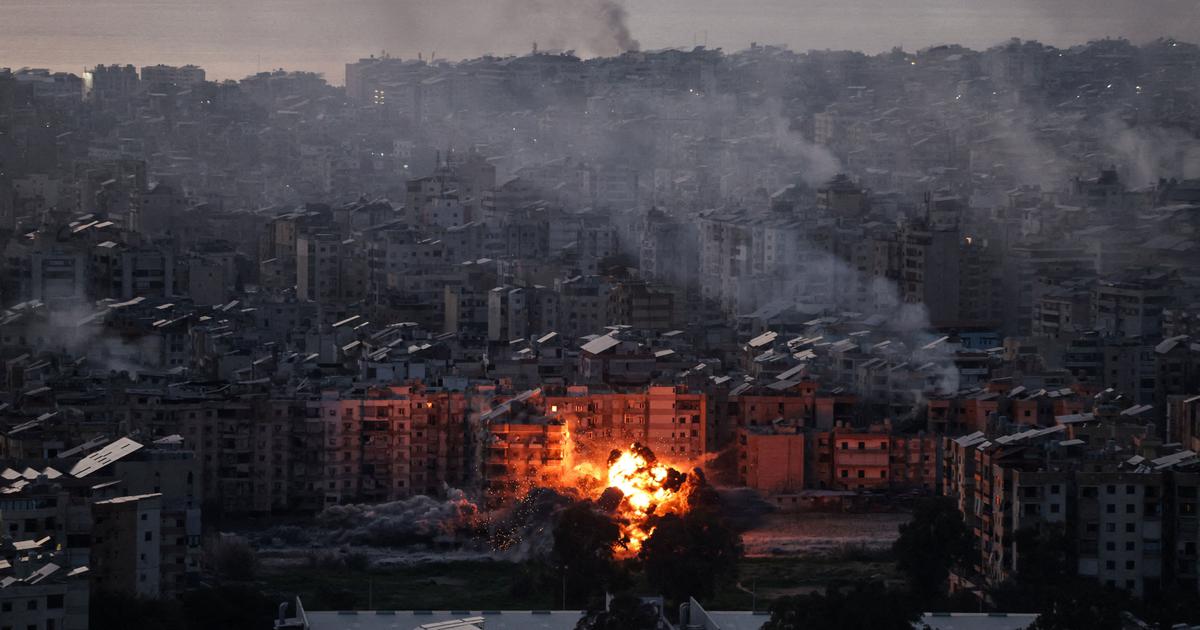
The conflict broke out on February 28 after Israel and the US had launched a joint operation to “degrade the capabilities” of the Iranian government. Tehran retaliated by striking Israel and US military bases in the region, and targeting major cities in other Gulf countries and some ships.
Here are more top updates from the conflict in West Asia:
- Emirates on Saturday said that it had resumed its flights to and from the Dubai airport. This came an hour after the airline announced that it was suspending all its operations in the city until further notice.
- The Dubai airport operator said on Saturday that it had partially resumed operations with some flights out of the Dubai International Airport and the Al Maktoum International Airport on the outskirts of the city. The update came less than an hour after it said that operations at the Dubai International Airport had been temporarily suspended, citing safety risks.
- Iran has destroyed a $300 million radar system crucial to directing United States missile defence batteries in the Gulf, Bloomberg quoted a US official as saying on Friday. This risks straining the US’ ability to counter future attacks in the region.
- Commercial satellite imagery showed that radar and support equipment used by the US THAAD missile defence systems were destroyed at an air base in Jordan in the early days of the conflict, CNN had earlier reported. The Terminal High Altitude Area Defense is a US Army anti-ballistic missile defence system designed to intercept ballistic missiles at the edges of the atmosphere.
- On Friday, US President Donald Trump said that he would not seek a deal with Iran without Tehran’s “unconditional surrender”. In a post on social media, Trump said: “After that, and the selection of a GREAT & ACCEPTABLE Leader(s), we, and many of our wonderful and very brave allies and partners, will work tirelessly to bring Iran back from the brink of destruction.” The US president added that his intention was to “MAKE IRAN GREAT AGAIN [MIGA!]”.
- Trump’s comments came a day after he told Reuters that Washington must be involved in choosing the next leader of Iran. “We are going to have to choose that person along with Iran,” Trump told the news agency. “We are going to have to choose that person.” Iranian Supreme Leader Ayatollah Ali Khamenei was killed in the attacks on February 28.
- On Friday, Amir Saeid Iravani, Iran’s ambassador to the United Nations condemned the US interference in selecting Khamenei’s successor, AFP reported. Iravani said that Trump’s comments constituted a “clear violation of the principles of non-interference in the internal affairs of states and enshrined in the Charter of the United Nations”.
- Iravani told reporters in New York that Iran was a “sovereign and independent state”, adding that “it does not accept and will never allow any foreign power to interfere in its internal affairs”. “The selection of Iran’s leadership will take place strictly in accordance with our constitutional procedures and solely by the will of the Iranian people, without any foreign interference,” he added.
- A spokesperson for Iran’s Islamic Revolutionary Guard Corps challenged Trump to deploy US naval vessels to escort oil tankers through the Strait of Hormuz, Reuters quoted Iranian state media as reporting on Friday.
- Iran on Monday had claimed that the Strait of Hormuz was “closed” for shipping traffic, warning that any vessel attempting to pass through the strategic waterway would be set on fire, according to reports. A day later, the US president had said that the US Navy would escort oil tankers through the strait. The narrow waterbody connects the Gulf to the Arabian Sea. About 20% of global petroleum liquids consumption traverses the maritime chokepoint.
The joint attacks by Israel and the US on Iran came amid tensions between the three countries over Tehran’s nuclear programme. Washington acts as a guarantor of Israel’s security. Israel has been claiming that Iran is close to obtaining a nuclear weapon, which could alter the regional security balance.
Tehran has long maintained that its nuclear programme is for civilian purposes.
The tensions
The US has repeatedly demanded that Iran give up its nuclear programme, threatening that Tehran must meet its terms or face consequences.
Khamenei had warned on February 1 that an attack by the US would spark a “regional war”.
Israel had been preparing for a possible conflict with Iran for several weeks.
In June, Tehran and Tel Aviv agreed to a ceasefire after 12 days of hostilities.
At the time, the Israeli military had struck what it claimed were nuclear targets, and other sites, in Iran with the aim of stalling Tehran’s nuclear programme. Iran retaliated with missile attacks on Israel.
Both countries had later accused each other of violating the ceasefire.
The two countries had been nudged by the US to accept the ceasefire after Washington on June 22 joined Israel’s war against Iran. The US military had carried out what Trump had described as a “very successful attack” on Iranian nuclear sites in Fordo, Natanz and Esfahan.
While Trump had claimed at the time that Iran’s nuclear facilities had been “completely obliterated” in the attacks, Washington’s preliminary intelligence assessment had said that the strikes only set it back by a few months, and did not destroy its nuclear programme.
Trump’s fresh focus on Iran came after the US’ military operation in Venezuela. On January 3, the US military abducted Venezuelan President Nicolás Maduro and his wife, Cilia Flores, for alleged drug trafficking.
Almost simultaneously, on December 28, protests erupted in Iran initially focused on discontent about rising inflation. However, they later expanded as demonstrations in more than 100 towns demanded an end to clerical rule.
Following this, Trump had announced that the US military was moving warships towards Iran “just in case” he wants to take action, saying that he was “watching them very closely”.
